Extreme Citizen Science
2008- | Muki Haklay, Fabien Moustard | ExCiteS (University College London, United Kingdom)
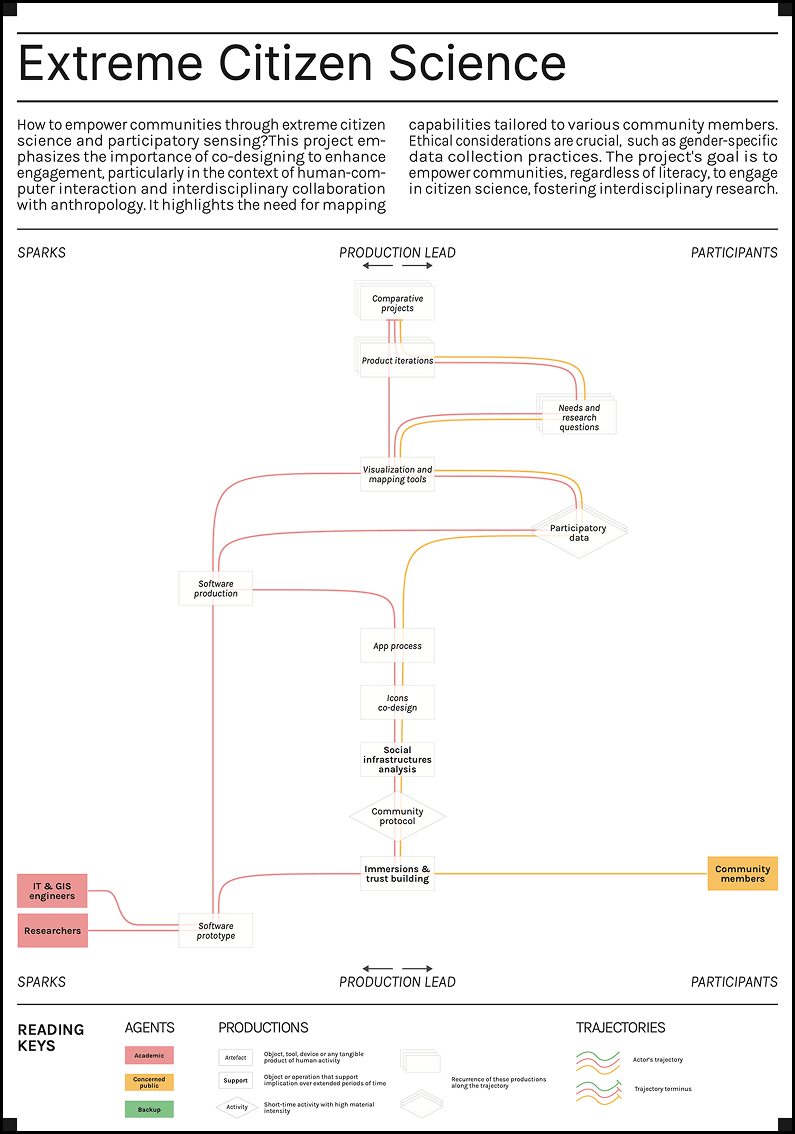
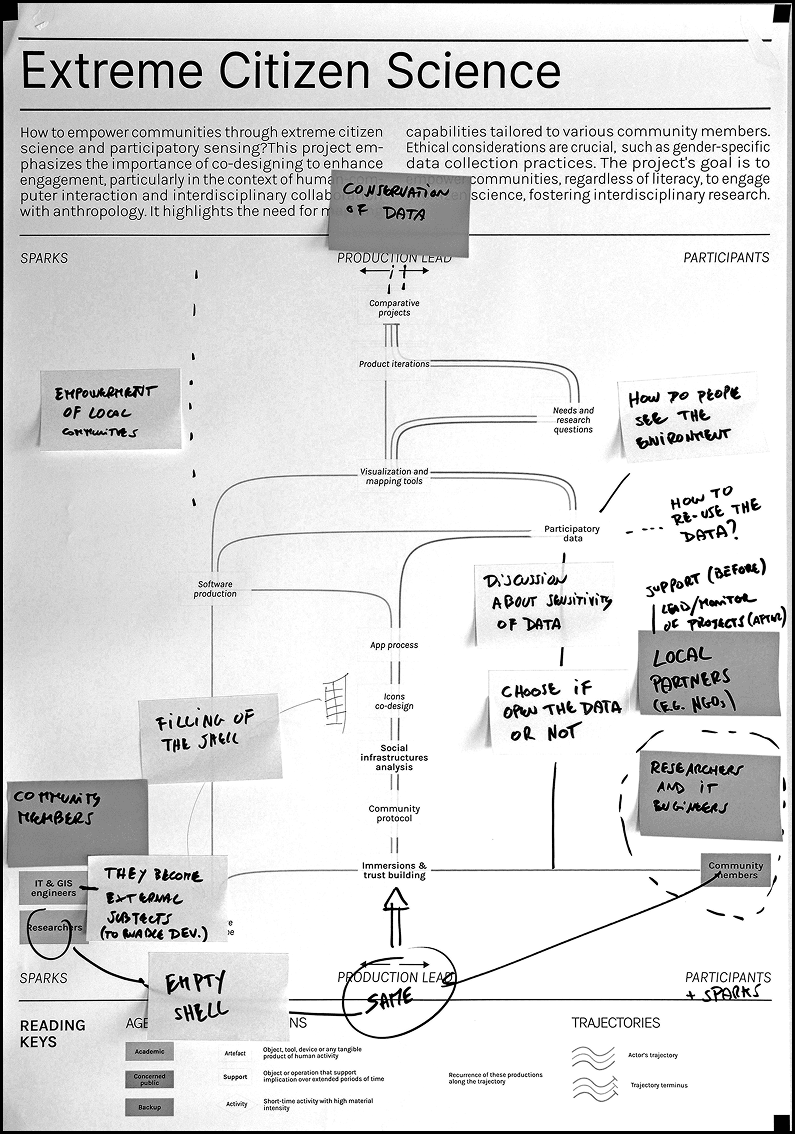
Extreme Citizen Science (ExCiteS) began in 2005 in the Congo Basin, when an anthropologist was approached by local hunter-gatherers seeking to document the impact of deforestation on vital food sources, such as caterpillars. This encounter sparked the development of a groundbreaking approach – later termed “Extreme Citizen Science” – which empowers marginalised communities, often far removed from scientific institutions or traditions, to define, gather, and interpret scientific data to address better real-world issues they face. Designed for use in low-connectivity environments and with participants unfamiliar with digital tools, the project inverts conventional research dynamics: scientific inquiries originate from local concerns rather than academic hypotheses. Supported by UK national funding and later by the European Research Council (2016-2022), ExCiteS has since expanded to 12 countries across 21 case studies, following a shared methodology. Interdisciplinary teams (comprising anthropologists, geographers and computer scientists) live and work in communities to co-design research processes with local people. Using smartphones adapted with intuitive visual interfaces (such as icons and simple maps), participants gather ongoing data on biodiversity, health, or land rights. In the Brazilian Pantanal, for example, fishers have successfully used this data to defend land claims in court. At its core, the initiative is deeply collaborative. Indigenous communities, researchers, NGOs, and international bodies work together in relationships grounded in trust, shared responsibility, and, at times, remuneration, recognising the value of local expertise. By making visible what satellites cannot detect and what short-term researchers might miss, Extreme Citizen Science demonstrates how participatory technology can thrive in extreme conditions. The project is reshaping global conversations about citizen science, demonstrating its relevance to addressing critical issues such as biodiversity conservation, territorial sovereignty, food security, and pandemic preparedness.


← Grab me →